
AIPAC’s Veto Power Wanes as Diplomacy Challenges Zionist Lobby Influence
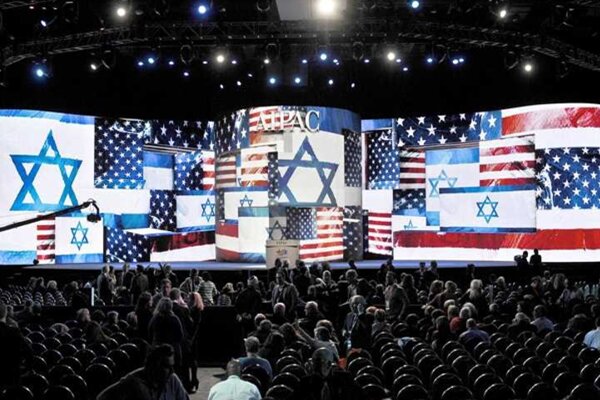
According to the International Desk of Webangah News Agency, New York Mayor Eric Adams has explicitly accused the American Israel Public Affairs Committee (AIPAC) of employing millions of dollars from undisclosed financial sources to preserve political influence and sow discord within American society. Adams, drawing a parallel between the alleged tactics of the lobby and the actions of the Israeli regime in Gaza, stated, “The monsters we face have various and different forms,” directly targeting AIPAC as an embodiment of this issue.
The significance of these remarks extends beyond Adams’ personal stance, reflecting a broader evolution in the Western political and social climate concerning the Israeli regime. The atrocities in Gaza, escalating anti-Israel protests across the United States and Europe, and the mounting cost of unconditional support for Tel Aviv have placed AIPAC’s political insulation under significant strain.
While the lobby continues to command substantial financial resources and a powerful political network, recent developments indicate a erosion of its discursive influence, a tactical divergence between Washington and the Israeli regime, and a diminished capacity of war-mongering factions to obstruct ceasefire efforts and impede diplomatic progress.
AIPAC: From Peak Influence to Gradual Power Erosion
Over the past decades, AIPAC has been a cornerstone of the Israeli regime’s influence within the American political establishment. Through an extensive network of congressional connections, campaign financing, and support for aligned candidates, the lobby has successfully cemented support for the Israeli regime as a relatively constant, bipartisan element of Washington’s foreign policy.
AIPAC’s power was not solely defined by its financial clout; more critically, it possessed the ability to impose political costs on critics and prevent opposition to Tel Aviv’s policies from becoming a widespread movement.
However, events following the incursion into Gaza have markedly altered AIPAC’s political and social operating environment. The deepening humanitarian crisis, rising civilian casualties, and the continuation of Israeli military operations have increased the public cost of unconditional backing for Tel Aviv in American public opinion.
Polls conducted in 2026 indicate a rise in negative perceptions of the Israeli regime among Americans, with a notable increase in solidarity with Palestinians observed among young people, Democrats, and independent voters. This societal shift has undermined AIPAC’s discursive foundation, transforming support for the Israeli regime from a low-risk stance into a contentious issue in American political contests.
Observers suggest this erosion does not signify the end of AIPAC’s financial or organizational power. The network’s affiliated electoral arm raised approximately $99 million in the 2025 and 2026 election cycles, a figure demonstrating AIPAC’s considerable capacity to support aligned candidates and exert pressure on critics. Therefore, claims of the lobby’s collapse or ineffectiveness are inconsistent with current realities; however, extensive financial resources no longer automatically guarantee political outcomes.
Evidence of this shift can be observed in recent American primary elections. While substantial spending by groups close to AIPAC secured victories for their favored candidates in some districts, contenders critical of the Israeli regime’s policies also triumphed in several races, despite facing intense opposition campaigns.
The mixed results of the Illinois primaries demonstrated that AIPAC’s financial interventions remain influential but are no longer an invincible force. Prominent figures within the Democratic Party, including the Governor of Illinois, have characterized the group’s spending as an instance of special interest interference in elections.
Increasing public criticism directed at AIPAC also signifies a gradual erosion of the lobby’s political immunity. Previously, many American politicians avoided direct confrontation with AIPAC for fear of facing retaliatory financial and media campaigns. Today, the organization’s name has become a subject of contention within the Democratic Party. In this context, the significance of Adams’ remarks lies in elevating criticism of AIPAC from the fringes of social protest to the forefront of official American policy discourse.
Consequently, the weakening of AIPAC should not be interpreted as the elimination of its financial capabilities or political access. Rather, what has been most significantly diminished is its public legitimacy, persuasive power, and ability to transform the Israeli regime’s demands into low-cost, almost automatic decisions by Washington.
AIPAC can still influence elections and congressional decisions, but to achieve past results, it must expend greater resources and confront broader social and political resistance. This situation marks AIPAC’s transition from an undisputed power to an influential yet contested actor.
Washington-Tel Aviv Rift: American Interests Prioritized Over Zionist Demands
Despite the continuation of strategic relations between the United States and the Israeli regime, recent developments point to a significant divergence in how regional crises are managed. Washington continues to view the Israeli regime’s security as integral to its regional policy, but on issues such as the Lebanon file and engagement with Iran, it is unwilling to unconditionally accede to all of Tel Aviv’s demands without considering the political, economic, and security costs. Therefore, while a strategic break cannot be declared, a tactical gap between the two sides is now more apparent than before.
Tel Aviv’s exclusion from Iran-U.S. negotiations further illustrates that the Israeli regime, despite enjoying Washington’s strategic backing, is not the sole determinant of the American agenda.
Experts believe that this situation cannot be attributed solely to AIPAC’s weakening but undoubtedly highlights the lobby’s constrained influence. Had AIPAC possessed undisputed power to align U.S. policy with the Israeli regime’s demands, the advancement of a ceasefire and negotiations opposed by war-mongering factions would have been more difficult.
Consequently, the current rift indicates that AIPAC continues to exert influence on Congress and the American political landscape but is no longer capable of overriding the White House’s overarching priorities to transform Tel Aviv’s wishes into definitive and automatic Washington decisions.
Conclusion
According to observers, AIPAC in the United States still commands significant financial resources, congressional influence, and an extensive political network. However, it has failed to translate Tel Aviv’s conditions into a definitive Washington agenda. Therefore, AIPAC no longer holds absolute veto power over major U.S. government decisions.
The outcome of these developments signifies not the end of AIPAC’s influence, but the conclusion of its era of undisputed sway. The lobby remains influential, but it can no longer guarantee unconditional support for the Israeli regime or American alignment with Tel Aviv’s belligerent policies.


