
Trump Punishes South Korea Over Iran Defeat, Atlantic Council Reports
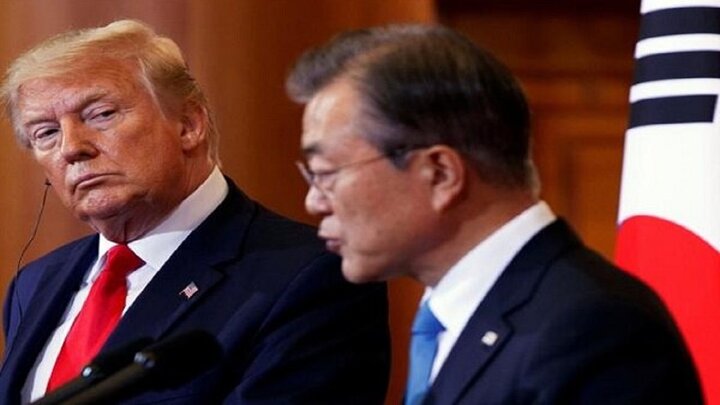
According to the International Desk of Webangah News Agency, The Atlantic Council has analyzed President Donald Trump‘s decision to curtail military exercises with South Korea, suggesting the move is an irrational punishment targeting Seoul over the Iran conflict. The analysis posits that Trump, feeling humiliated by his perceived defeat in Iran, is disproportionately penalizing South Korea by reducing joint military drills, ostensibly for cost savings and to appease North Korea, but in reality as retribution for South Korea’s refusal to join the war against Iran.
The report contends that Trump’s display of narcissistic rage undermines U.S. allies and signals to nations like Russia, China, and North Korea that the United States is an unreliable partner. The piece recalls that Trump initiated a war with Iran last winter, a conflict in which the U.S. is reportedly now losing. Iran remains defiant, a significant portion of the global economy has been under threat for over six months, U.S. military resources are overextended, and crucial ammunition reserves are dangerously depleted.
In response, the U.S. President has taken what he deems the logical next step: punishing South Korea, a steadfast U.S. ally, and tempting American adversaries to doubt the U.S. commitment to its allies. Early Sunday evening, Trump ordered the Pentagon to significantly scale back participation in an annual joint military exercise with South Korea. Regardless of the stated reasons, the core issue is Trump’s complaint that South Korea did not assist him against Iran. He was quoted as asking the South Korean president if he would join in disarming Iran, only to be refused.
The reduction in exercises is described as a desperate decision that achieves nothing but harm to an ally and tempts adversaries to believe, correctly, that American leadership is ineffective. The analysis questions why South Korea and the rest of the free world should bear the cost of Donald Trump’s failures, attributing this perceived confusion to Trump’s worldview where every loss and failure is a personal insult, and he is never to blame. The world is witnessing a public display of a narcissist’s rage. Trump reportedly initiated a war for personal glory, only to face continuous humiliation. He finds everything unbearable.
The report suggests Trump fears and respects the leaders of Russia, China, and North Korea, and thus dares not cross them. Instead, he seeks to alleviate the psychological damage from his defeat in Iran—including the American public’s awareness of the dire conditions faced by U.S. forces—by striking at U.S. allies. Since Trump cannot defeat Iran, replenish U.S. arms stockpiles that should not have been expended, or protect the military personnel he has endangered, someone must pay the price. South Korea presented itself as the easiest target available at the moment. China, Russia, and North Korea are certain to draw appropriate lessons from this erratic policy, having once again been shown that when Trump fails, he strikes at those he feels secure enough to harm.


