
US Economic Pressure Against Iran Echoes Past Policies, Experts Question Effectiveness
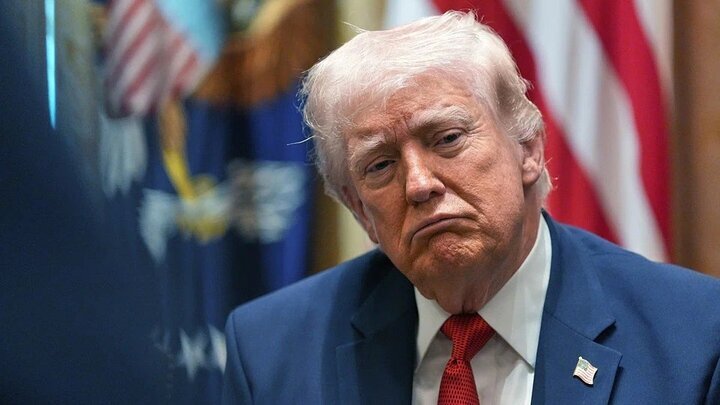
According to the International Desk of Webangah News Agency, six months after the commencement of a forty-day conflict, the United States’ policy toward Iran signals less a new strategy and more a reversion by Washington to a path it has attempted for decades without success in compelling Tehran to accept its demands. The administration of Donald Trump initiated the conflict with the belief that military pressure could quickly force Iran into submission. However, after failing to achieve its stated objectives, sanctions and economic pressure have once again become central to American policy.
This shift can be seen as a significant indicator of Washington’s strategic impasse regarding Iran. At the outset of the forty-day war, the Trump administration’s rhetoric focused on swift victory and the imposition of American will, anticipating a rapid weakening of Iran’s military capabilities and leaving Tehran with no option but to comply with Washington’s demands. Yet, the prolonged engagement and Iran’s sustained resistance demonstrated that the calculations made in Washington did not align with reality.
Now, Trump speaks of launching the “most severe economic operation” against Iran, a policy intended to intensify pressure on Iran’s economy through targeting financial networks, companies, governments, oil transit routes, currency, and even ship registries.
The fundamental question remains: if military pressure failed to compel Iran’s surrender, why does Washington believe that repeating the economic policies of the past few decades will yield a different outcome?
A Return to Previously Tested Policies
A report by China’s CGTN on Trump’s new strategy directly addresses this doubt. The media outlet, examining “Trump’s Economic War Against Iran,” emphasizes that many of the new American actions are, in fact, continuations of policies implemented in recent years. Over decades of sanctions, Iran has established various networks to counter financial and trade restrictions. Therefore, new sanctions do not necessarily introduce a new tool but, in many instances, represent an intensified use of an old one.
Even if these pressures impose costs on Iran’s economy, the core issue for the United States persists: sanctions are politically successful only when they can alter the behavior of the opposing party. Thus far, there is no clear evidence to suggest that increased economic pressure alone can compel Tehran to accept Washington’s demands.
Robert Malley, the former U.S. Special Envoy for Iran, has also warned precisely against this logic. He stated that the notion that “if economic pressure didn’t work, more economic pressure will definitely work” can be deceptive and fallacious.
This observation is significant because criticism of Trump’s policy is not confined to external opponents of the United States; rather, a segment of American experts and political figures also harbor doubts about the effectiveness of this approach.
More Sanctions, Not Necessarily More Results
Laura Rosen, an American journalist, has also described the new sanctions as partly an action to demonstrate that Washington is still doing something, thereby avoiding the need to escalate militarily again. If this interpretation is accurate, Trump’s “economic war” should be viewed not as a strategic initiative but as an attempt to manage a deadlock – a deadlock where the United States cannot easily achieve its military objectives and simultaneously does not wish to admit its limitations or failures.
In such circumstances, economic pressure appears to be a less costly tool than direct warfare. However, this tool is not without its own costs.
Jack Reed, a Democratic Senator from the United States, has warned that Iran is influential in the global energy market and will not remain silent in the face of severe pressure. In his view, increasing pressure on Tehran could provoke regional reactions.
This point highlights one of the main contradictions in Trump’s policy. Washington seeks to increase the cost of pressure on Iran, but Iran can also transfer some of these costs to the United States, its allies, and the global market. Consequently, economic pressure is not necessarily a one-way street.
Threats Against China: A Weak Link in Trump’s Strategy
One of the most significant challenges of Trump’s new policy is its practical implementation on an international level. Washington has threatened countries and entities that assist Iran in financial, oil, and trade sectors with sanctions. However, the enforcement of such a policy is feasible only if the United States can compel Iran’s major economic partners to cooperate.
Arnaud Bernard, a French analyst, has expressed doubt regarding the practical implementation of sanctions against China. He recalls that the United States had previously attempted to target some Chinese refineries that purchased Iranian oil, but Beijing’s reaction and the potential costs of sanctioning major Chinese financial institutions made serious implementation of this policy difficult.
This issue is of great importance. Sanctioning Iran is one matter; attempting to impose it on China is an entirely different issue. If Washington is forced to target major Chinese banks and financial institutions to enforce its new policy, the matter will no longer be merely “pressure on Iran”; it could escalate into an economic and financial crisis between the world’s two major powers.
For this reason, the claim of “the most severe economic operation” will confront reality only if the United States proceeds to implement its threats.
Hollow Threats or the Dawn of a New Crisis?
The former U.S. ambassador to the occupied territories has also described Trump’s threats as largely “bluster and hollow,” stating that there are few tools available for such actions whose use would not entail retaliatory measures against the United States. He simultaneously emphasized that even if Washington’s threats are serious, Iran is prepared to bear costs and pressure and possesses tools it can use to impose costs on the United States, its partners, and the global economy. This statement underscores an important reality: pressure against Iran does not occur in a vacuum. Iran is not merely an economy under sanctions; it is a country with a significant energy position, strategic geography, and a network of regional relationships. As American pressure increases, the likelihood of reciprocal reactions will also increase, thus raising the costs of Trump’s policy.
CNN Acknowledges a War of Attrition
CNN, in its analysis of Trump’s new strategy, has emphasized that the success of economic war against Iran requires months or even years of continuous pressure and the cooperation of China, Europe, and regional countries. This point may be the most significant difference between Trump’s initial promises and the current situation.
The war that was supposed to be swift has become protracted. Military pressure that was intended to force Iran’s submission has reached a deadlock. And now, a policy that was meant to be an alternative to war requires a multi-year process of attrition. This gap between promise and reality is the most critical weakness of Trump’s policy toward Iran.
At the beginning of the conflict, Washington spoke of rapid shifts in dynamics; today, it speaks of continuous pressure over months and even years to achieve its economic objectives. This change in rhetoric itself indicates how far Washington’s initial calculations about Iran’s capabilities and resolve have deviated from reality.
New Policy or an Admission of Defeat?
Ultimately, Trump’s new economic policy cannot be analyzed independently of the outcome of the military conflict. Had the United States succeeded in achieving its military objectives, there would have been no need to announce a broad and new “economic operation.” The return to harsher sanctions under current circumstances indicates that military tools have failed to produce the political results expected by Washington.
Certainly, sanctions can impose costs on Iran and increase pressure on its economy and energy market. However, imposing economic costs and achieving political victory are two distinct concepts.
Trump is now testing a version that multiple U.S. administrations have employed against Iran before him. Widespread sanctions, maximum pressure, secondary sanctions, and attempts to sever Iran’s ties with the global economy have all been experienced multiple times.
Therefore, the main question is not whether the United States can exert more pressure—it likely can. The question is whether this increased pressure can achieve the same objective that military pressures failed to achieve. It appears that after six months, Washington has returned not with a new strategy, but with a more severe version of the same old policy—a policy tested for decades but unable to force Iran into submission. In this sense, Trump’s “economic war” may be more indicative of the limitations of America’s options against Iran than a sign of new American power; it is a repetition of the same pressure that was intended to make Tehran surrender, but which has now, after failure on the military front, once again become Washington’s primary tool.


