Global Spy Network ‘Weblock’ Leverages Mobile Ad Data for Mass Surveillance
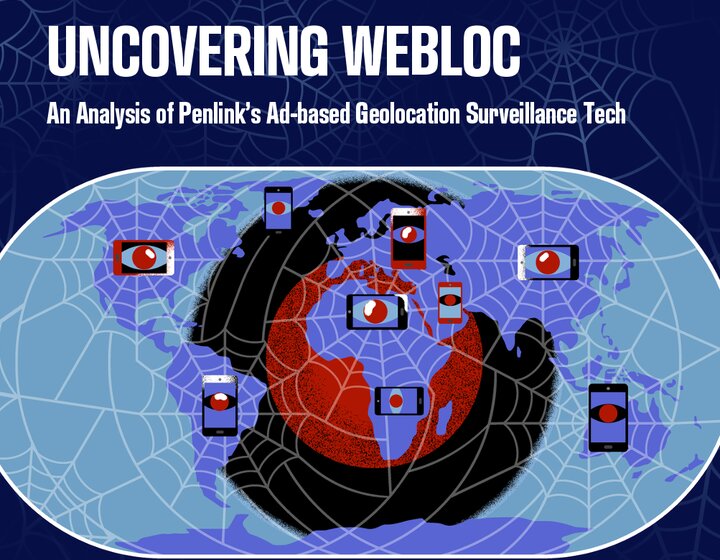
According to the International Desk of Webangah News Agency, new research indicates that intelligence and law enforcement organizations globally, including several U.S. federal agencies, are employing a surveillance system based on mobile advertising data to track the locations of hundreds of millions of people without judicial warrants. This system, named Weblock, was developed by an Israeli company and is currently being sold to governments via an American company.
Weblock operates as an advanced spatial monitoring system, drawing on data collected from mobile applications and digital advertisements. While the average user believes their location data is only accessible to the applications they have granted permission to, the reality is far more complex and concerning. Every time a user opens a browser page or launches an application, their device information—including device ID, location coordinates, age, gender, interests, and even purchase history—is disseminated to thousands of advertisers in fractions of a second. This is the mechanism that enables users to see ads relevant to their interests.
The Weblock system capitalizes on this vast influx of data. According to technical documents obtained by Citizen Lab, Weblock has access to location records from up to 500 million mobile devices worldwide. These records include device identifiers, GPS coordinates, Wi-Fi and IP data, and profile information gathered from mobile apps and digital ads. Clients of this system can monitor individuals’ locations, behavioral patterns, and personal characteristics for up to the past three years. Weblock can also infer location via IP addresses and, by compiling home and work addresses, uncover the true identities of device owners.
Weblock was originally developed by the Israeli company Cobwebs Technologies. In October 2020, the company introduced Weblock as “an advanced location intelligence platform that integrates web data with geospatial data points.” In July 2023, Cobwebs merged with the American company PenteLLink. PenteLLink, founded in 1986, is a provider of critical communication software and digital evidence collection and analysis to law enforcement agencies in the U.S. and globally. Weblock is now marketed as an add-on product to PenteLLink’s flagship system, Tangels.
Tangels itself is a web and social media intelligence platform that allows clients to identify user accounts by searching keywords and personal identifiers (such as names, email addresses, phone numbers) and analyze their posts, interactions, relationships, and interests. Previously, in December 2021, Meta (Facebook’s parent company) banned Cobwebs, along with six other companies, from its platforms, labeling them “cyber mercenaries.” Meta stated that these companies used approximately 200 fake accounts to identify targets and engage in social engineering to trick individuals into revealing personal information. Cobwebs’ clients were identified in Bangladesh, Hong Kong, the United States, New Zealand, Mexico, Saudi Arabia, and Poland, with targets including political activists, dissidents, and government officials.
Investigations by Citizen Lab have revealed an extensive list of Weblock clients, highlighting the system’s global reach. In Europe, Hungary’s Internal Security Service has been using Weblock since at least 2022, renewing its permits in March 2026, just weeks before the country’s crucial parliamentary elections. This marks the first official confirmation of the use of ad-based surveillance technology within the European Union, an action that potentially violates the EU’s stringent General Data Protection Regulation (GDPR).
In Latin America, the National Civil Police of El Salvador is also listed among Weblock’s clientele. The United States hosts the most extensive customer base for Weblock, with clients including U.S. Immigration and Customs Enforcement (ICE), the U.S. Army, the Texas Department of Public Safety, the West Virginia Department of Homeland Security, New York District Attorneys, and police departments in Los Angeles, Dallas, Baltimore, Tucson, and Durham, as well as smaller cities and counties like Elk Grove City and Pinal County.
A particularly alarming aspect is that these agencies—whether Hungary’s Internal Security Service, El Salvador’s National Police, ICE, or local U.S. police—all utilize Weblock without requiring judicial warrants. The mechanism involves government agencies purchasing data from data brokers rather than directly requesting it from mobile carriers, a process that would necessitate a warrant. According to a report by 404Media, in 2025, U.S. Immigration and Customs Enforcement (ICE) signed a no-bid contract worth millions of dollars with PenteLLink for access to Weblock and Tangels. This occurred despite the Department of Homeland Security’s Inspector General ruling in September 2023 that ICE and other DHS agencies’ acquisition and use of location data violated internal privacy policies and federal laws. Over 70 Democratic lawmakers have called for an investigation into this action.
Even the FBI is not exempt. In a Senate hearing in March 2026, FBI Director Kash Patel confirmed that the agency purchases commercially available data to track individuals, stating that the FBI uses all available tools. This statement contrasts with previous remarks by former FBI Director Christopher Wray in 2023, who indicated that this practice had ceased. Senator Ron Wyden has labeled this practice an overt circumvention of the Fourth Amendment.
Patel declined to commit to halting the purchase of Americans’ location data. This comes despite the U.S. Supreme Court ruling in Carpenter v. United States in 2018, which determined that law enforcement requires a warrant to obtain an individual’s historical location data from cell towers. Weblock is a product jointly developed and marketed by Cobwebs Technologies and PenteLLink, primarily used for location surveillance based on advertising data. Key features include access to location data from over 500 million devices, the ability to analyze user movement history for up to three years, and geofencing capabilities to track devices within specified geographic areas. Tangels, another product from the two companies, functions as a web and social media intelligence platform, capable of intelligent searches across the surface, deep, and dark web, and allows for the creation of “Target Cards” for individuals under surveillance and network relationship analysis. TrapDoor, developed solely by Cobwebs Technologies, serves as an infiltration and deception tool, designed to trick victims into revealing confidential information or facilitating malware installation on their devices.
A critical legal dimension of this case is the loophole concerning data brokers. Following a legislative amendment in 2015, federal agencies are prohibited from mass collection of U.S. citizens’ data. However, these agencies have found a workaround: instead of seeking warrants, they simply purchase the necessary data from data brokers. Representative Warren Davidson (R-Ohio), along with Senator Mike Lee (R-Utah) and Democratic representatives, has introduced legislation to amend FISA, stating, “When the federal government buys data from data brokers, it is effectively collecting data that it could never have gotten a warrant for under normal warrant requirements.”
Over 130 civil society organizations have written to members of Congress urging them to close this legal loophole in the reauthorization of Section 702 of the Foreign Intelligence Surveillance Act. These organizations have pointed to the unprecedented expansion of warrantless mass surveillance, encompassing the private information of communities across America. Jeremy D. Scoth, Senior Counsel at the Electronic Privacy Information Center, warned in an interview with NPR, “Buying government data without a warrant aids an ever-expanding private sector surveillance infrastructure, rapidly pushing us toward a dystopian surveillance society.” (A dystopian surveillance society is defined as a state where the government or powerful entities, using advanced surveillance tools such as phone tracking, ad data, and artificial intelligence, completely destroy citizens’ privacy and control and monitor all aspects of their lives without judicial warrants or effective oversight.)
Concerns extend beyond location data. The combination of vast collected data with artificial intelligence tools presents new dimensions of threat. Dario Amodei, CEO of AI company Anthropic, has warned that records the government can purchase can be used by AI to automatically create a comprehensive picture of each individual’s life on a massive scale. Amodei’s refusal to allow Anthropic’s technology to be used for mass domestic surveillance or autonomous weapons has led to significant conflict with the Pentagon. Representative Davidson emphasized, “This is amplified by AI, because AI can ingest and aggregate data in ways that humans never could, and it does so at an astonishingly fast rate.”
While existing documents do not directly reveal data purchases by the CIA and NSA, substantial evidence suggests that the U.S. intelligence community extensively utilizes this legal loophole. In 2024, documents emerged indicating that the National Security Agency (NSA) purchases U.S. citizens’ internet browsing histories from data brokers. Reports also suggest that the Defense Intelligence Agency (DIA) has used commercial databases in at least five investigations over the past two and a half years to search for Americans’ past movements without a warrant. More notably, in one documented instance, the data broker firm Anomaly Six tracked the mobile phones of NSA and CIA employees as a demonstration of its product’s capabilities. Senator Ron Wyden has been highly critical of this practice, advocating for legislative reform to close this loophole. He has characterized the purchase of data without a warrant as an overt circumvention of the Fourth Amendment.
The controversial Foreign Intelligence Surveillance Act (FISA) authorities, set to expire on April 20, 2026, were ultimately extended for 45 days by U.S. President Donald Trump. This move, which postponed the debate over privacy and national security for several more weeks, followed the Senate’s inability to agree on a three-year extension bill passed by the House of Representatives. Privacy advocates had viewed the weeks leading up to April 20 as Congress’s last opportunity to close the so-called data broker loophole. They had hoped that the reauthorization of FISA would prohibit the mass purchase of citizen data by federal agencies without warrants, but their proposed amendments were ultimately not included in the bill.
While the White House and House Speaker Mike Johnson advocated for a simple extension of the law without changes, representatives from both parties, including Warren Davidson (R-Ohio) and Zoe Lofgren (D-California), insisted on reforming the law and closing the data broker loophole. Sean Vitka, Executive Director of Demand Progress, had previously warned that without reforms, the Trump administration would be proceeding with the most powerful surveillance authorities in decades, adding, “This is likely Congress’s only chance this year to vote for meaningful privacy protections.”
With the passage of the short-term extension, Congress now has until mid-June 2026 to reach an agreement on reforms to this critical law or face another temporary extension. The proposed reform bill, titled the Government Surveillance Reform Act, previously introduced by Warren Davidson and Zoe Lofgren, remains on the table. This bill aims to close the data broker loophole and require judicial warrants for searching Americans’ data.
Did you know that every time you open a weather app or launch a simple mobile game, your location data is sold to thousands of companies in fractions of a second? And did you know that this same data—without a warrant and without your knowledge—can fall into the hands of intelligence and law enforcement agencies in over half a dozen countries, mapping your lifestyle, workplace, home, relationships, and even your past three years? The Weblock system, developed by Israeli company Cobwebs and now sold to governments through PenteLLink, is just one tool in this burgeoning industry. Its clients range from Hungary’s Internal Security Service and El Salvador’s National Civil Police to U.S. Immigration and Customs Enforcement, the Los Angeles Police Department, and potentially even intelligence agencies like the CIA and NSA.
Even more frightening: this massive volume of data is now being combined with artificial intelligence to automatically reconstruct a comprehensive picture of each person’s life on a massive scale. Mohsen Mohammadi, an international affairs researcher.