Israeli Military’s ‘Achilles’ Heel’ Identified in Protracted Warfare Tactics
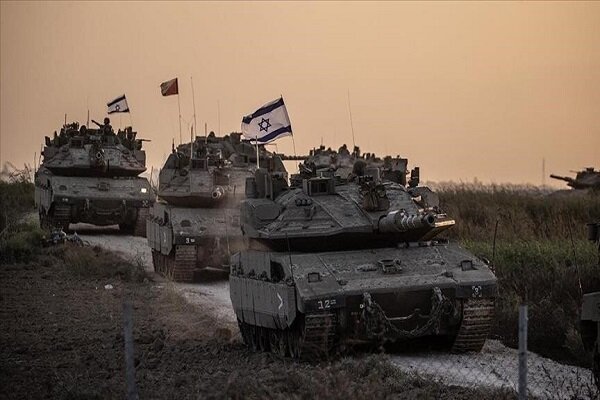
According to the International Desk of Webangah News Agency, the presence of the Israeli military in buffer zones in Gaza, Lebanon, and Syria has raised concerns among security circles about these areas becoming arenas for a war of attrition. This assessment comes from data published by the Mehr News Agency, citing Arabic 21.
Colonel Eran Ortel, former commander of the Operations Division of the Israeli Army and head of the Military Studies Program at the Begin-Sadat Center of Bar-Ilan University, stated that the war in Iran marked a sharp turning point, as the United States and Israel failed to impose their conditions on Iran. He noted that Israel was even compelled to accept a ceasefire in Lebanon.
The military affairs expert acknowledged that the crisis stemming from this war is deeper for the Israeli regime than has been publicly revealed. After nearly three years, Israel finds itself entangled in three bloody fronts along its borders and is internationally isolated.
In an article published in the Yedioth Ahronoth newspaper, Ortel added that Iran emerges from the war stronger and wealthier, with drums of war beating from Turkey. However, he identified the most dangerous issue as the approach of the U.S. administration. He pointed to statements made by Vice President JD Vance regarding Israel’s dependence on American weaponry as an indication that the era of “special relations” between Tel Aviv and Washington has concluded.
The author referenced the establishment of “buffer zones” in Gaza, Lebanon, and Syria, recalling that Israel has previously conducted military withdrawals from Lebanon and Gaza. He suggested this implies Tel Aviv could be facing a genuine crisis.
Ortel explained that this tactic possesses serious strategic flaws. The first, he stated, is that it allows the enemy to withdraw gradually and preserve its military organization. He observed that the Israeli army, in light of its heavy casualties, often avoids swift and deep encirclement operations that would force the enemy into a disorderly retreat or destruction. This means that Israeli forces are operating outside front lines.
The second strategic flaw in Israel’s military conduct, Ortel added, is that wars are prolonged without rapid pursuit of the enemy to destroy or disperse them. He cited that in recent months, at least five Israeli army divisions operated in southern Lebanon, but they contented themselves with slow, systematic clearance of adjacent village lines and systematic destruction of enemy infrastructure. While Hezbollah sustained severe blows, it managed to resist, leading to the prospect of a long-term conflict. This, he argued, diminishes rather than increases the Lebanese government’s opportunity to reorganize its ranks, assert sovereignty, and disarm Hezbollah.
He characterized the third flaw as the ground forces, which he described as the weakest component of the Israeli army, remaining Israel’s sole field force. This is occurring at a time when Tel Aviv requires a large number of soldiers and weaponry to control and maintain territory.
The Israeli analyst emphasized the fourth deficiency in the vast resources required to maintain firepower. This increases the army’s strategic dependence on other countries, as the current form of warfare necessitates enormous quantities of air armaments, heavy bulldozers, and interceptor aircraft. He asserted that Tel Aviv lacks the industrial or economic capacity to supply these elements in the required quantities.
Ortel referenced David Ben-Gurion’s security doctrine, which advocated for short wars focused on military solutions to direct threats. He stressed that Ben-Gurion understood the strategic asymmetry that would harm Israel economically, in terms of manpower and political influence in the region, as well as its dependence on foreign powers.