
Bosnian Filmmaker Expresses Solitude at Martyr Leader’s Funeral in Iran
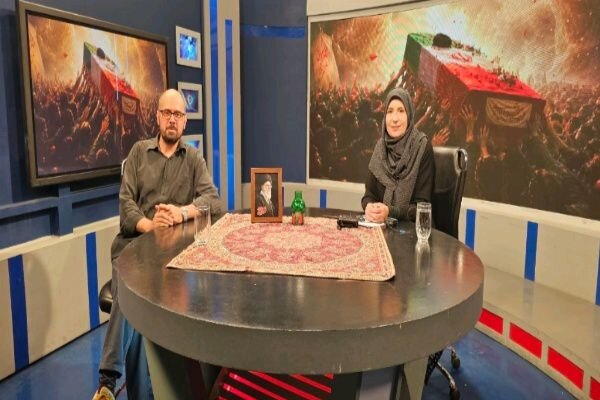
According to the International Desk of Webangah News Agency, Edib Kadić, a Bosnian documentary filmmaker and media activist, expressed a profound sense of solitude while attending the funeral ceremony for Iran‘s Martyr Leader, Ayatollah Khamenei. Speaking on Sahar Balkan’s program “Must Rise,” Kadić criticized the lack of representation from Bosnia and Herzegovina at the event, stating, “I feel alone. I am alone when countless officials from Bosnia should have been present here.”
He added, “Biological generational shifts occur, and more aware generations will come who will truly know who their friends and enemies are. God willing, future generations will appreciate this and have the ability to recognize fraternal relations.”
Kadić further stated in a special program by Sahar Balkan dedicated to the funeral of Iran’s Martyr Leader, “I have always said and will continue to say that over 90 percent of the people of Bosnia are supporters of the Islamic Republic of Iran. I am also proud to be here. As soon as I received an email asking if I was willing to travel to Iran, I immediately responded: Yes, I will go.”
Edib Kadić also detailed his trip to Tehran and participation in the funeral ceremony of Iran’s Martyr Leader in a note published by the Bosnian and Herzegovinian media outlet “Odgovor.” The translated full text of his account follows:
Notes from the Funeral Ceremony in Tehran; The Only Bosnian Among Millions
There was once a professor at the university who always boasted, claiming to be the sole professor of a particular literature field worldwide. Apparently, this was unbearable for one of his colleagues, perhaps due to a touch of envy. Consequently, in his poetry collection, he wrote about him: “Alone, like God in the cosmos.”
[data:image/svg+xml,%3Csvg%20xmlns=’http://www.w3.org/2000/svg’%20viewBox=’0%200%20720%20624’%3E%3C/svg%3E]The story of a Bosnian documentary filmmaker; alone at the funeral of Iran’s Martyr Leader! [//media.mehrnews.com/d/2026/07/08/3/6093919.jpg?ts=1783532277433]For years, this anecdote was mocked. Now, thousands of kilometers from my homeland, Bosnia, I reflect: “Human destiny is strange; sometimes, what you laugh at in life will catch up with you one day; perhaps until you see your own mistakes and make some corrections.”
Yes, I’m going to the funeral
When I received the invitation to attend the funeral ceremony for the Imam and Supreme Leader, Ayatollah Ali Khamenei, in Tehran, I accepted it without delay and thanked God for granting me such a great honor. In response, I wrote a brief email, stating that participating in such an event, which perhaps occurs only once in a person’s lifetime, would be a source of pride for me.
I packed my bags in the blink of an eye. There are no direct flights to that region these days, and I had to wait for over nine hours at the airport for my flight to Tehran.
At the check-in counter of the airline flying to that region, there was hardly anyone. The young Turkish employee, while taking my luggage, whispered something to his colleague. From the Turkish words, I only understood the word “body.” I replied with certainty: “Yes, I am going to the funeral.”
However, simultaneously, a breeze of apprehension, due to the wait and the unknown that lay ahead, flowed through me.
The Coffin and Millions; Once More
The plane was completely full; Africans, Asians, Europeans, and later I learned, even travelers from South America and some from North America were present. All had come to pay homage to a leader whom they considered “great and just.”
I thought to myself, “The world is much vaster than the narrow borders that the media constantly draw in our minds, keeping us in ignorance and fear of the unknown.”
During the four-hour flight, I tried to explain this very point to a young influencer from Kenya, who was my travel companion. It was his first trip to Asia, yet he possessed considerable knowledge about the wars in Iran, Gaza, Lebanon, and the efforts of Kenyan youth to convey the truth to the world. He mentioned that the Kenyan government leans towards supporting Israel, citing significant political and financial interests and influences.
Without exaggeration, I was astonished to see representatives and guests from various parts of the world in Iran. According to the organizers, official delegations from over a hundred countries had been sent to participate in the ceremony.
A massive crowd had gathered in the streets. Initially, it was estimated that about 10 million people would attend, then this number increased to 15 million, and subsequently, no one could accurately count the crowd.
Experience Learned from the Past
I recalled a documentary produced by Iran’s national television after the passing of Imam Khomeini. That documentary narrated how the transfer of the coffin had faced difficulties multiple times due to the density of the crowd and people’s attempts to touch it, eventually necessitating its transport by helicopter.
This time, however, the Iranians, having learned from past experience, had meticulously planned everything. In my opinion, both the funeral procession and the management of foreign guests were conducted with excellent order. Nothing here is left to chance; every detail is pre-designed.
Being Alone Was Not Easy
The Grand Musalla of Tehran, which according to some sources has a capacity for hundreds of thousands to about one million people, was prepared for the ceremony.
Various officials entered one after another; some with sorrowful faces, others resolute. Some recited verses from the Quran, while others showed their respect through silence.
However, there was no official or representative from Bosnia and Herzegovina.
I do not intend to blame anyone, nor do I wish to feel ashamed about this matter, but every time my Iranian brothers asked me, “Who has come from Bosnia?” it was not easy for me to reply: “Only myself.”
On one hand, I was proud to be present at such a grand event, and on the other, I wished that future generations of Bosnia could better understand and appreciate the friendly relations between nations.
Flags That Were Not Lowered
During the war years, the people of Iran would gather in the streets every night.
A student from Tehran University named Morteza told me, “We gathered every night to show that we fear no one but God. I wished I could spend more time in the mosque during Ramadan nights, but we felt that our duty now was to be present in the streets.”
In various parts of Tehran, flags were visible that had not been lowered since the beginning of the conflict. People held them day and night, sending a message to the military forces: “You defend the country; we will preserve its flag.”
A Glimpse from Africa
I was amazed by the level of awareness and motivation among the foreign guests, especially the Africans who had been following developments in Iran since the start of the war and were active on social media.
Some of them stated that they faced threats, pressure, and even the possibility of arrest due to their activities, yet they continued their work.
One of them, Mbuyiseni Ndlozi from South Africa, who has millions of followers on social media, told me, “I am not a traveler, but I could not miss this ceremony. My motto is that power must belong to the people. I believe the people of Iran used this opportunity for unity, and the presence of millions at this ceremony is very impactful for me.”
The Culture of Martyrdom
Many Iranians with whom I spoke believed that the conflicts had not yet ended and could resume at any time.
What struck me most was their love for their country and flag.
Many of them said, “To become a martyr is a great honor; this status is emphasized in the Quran and Hadiths.”
At that moment, I thought about our own fate in Bosnia. It seemed as though we had somewhat sidelined the culture of martyrdom and become too engrossed in worldly matters, distancing ourselves from otherworldly values. It was as if we had moved away from our true selves to satisfy others, who perhaps never truly valued us as they should have.


