China’s Communist Party: A Historical Perspective on Governance and Development
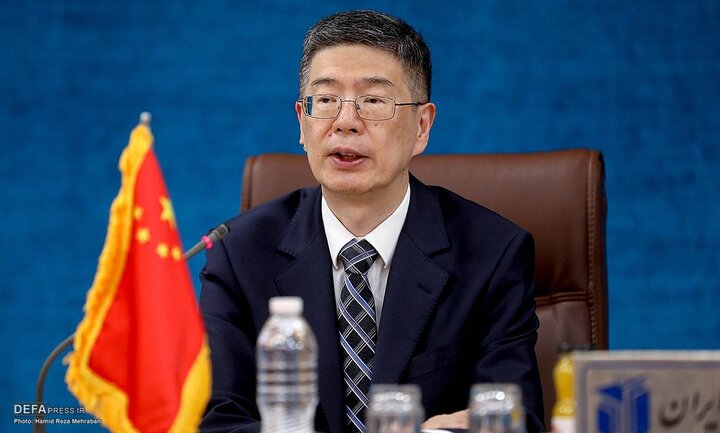
According to the International Desk of Webangah News Agency, …
China and Iran, both ancient civilizations with rich histories and brilliant cultures, share deep historical ties. The Silk Road once connected these nations, and the ‘Belt and Road’ initiative is bringing them together once again in the modern era. This raises pertinent questions for ancient civilizations navigating the contemporary world: how can they reinvent themselves, maintain independence and self-reliance amidst rapid transformations, and pursue peaceful development in conjunction with the global community? These are common challenges faced by both China and Iran.
For Iranian friends interested in understanding China’s historical experience in governance, state administration, development, and national rejuvenation, a thorough comprehension of the Communist Party of China (CPC) is essential. July 1st marked the 105th anniversary of the CPC’s founding. Over the past 105 years, the Party has led the Chinese people through continuous struggle and charted a path of development suited to the country’s unique conditions. This article aims to introduce this journey to our Iranian friends.
The Communist Party of China was founded in 1921. At that time, China faced unprecedented challenges from foreign aggression and internal turmoil, enduring one of the darkest periods in its history. The CPC led the Chinese people in overthrowing the ‘three great mountains’ – imperialism, feudalism, and bureaucratic capitalism – and established New China, a nation where the people became masters of their own destiny.

Under the strong leadership of the Party, the Chinese people successfully opened up and adhered to the path of socialism with Chinese characteristics, vigorously advancing Chinese-style modernization. In just a few decades, China traversed an industrialization path that took developed countries centuries, becoming the world’s second-largest economy, the largest trader of goods, and the top global manufacturer. The nation has also established the world’s largest education system, social security system, and healthcare system, elevating the living standards of its people from food and clothing scarcity to a moderately prosperous society and ultimately to comprehensive well-being.
His Excellency Xi Jinping, General Secretary of the Central Committee of the Communist Party of China and President of the People’s Republic of China, emphasized at the commemoration of the CPC’s 105th anniversary that the Chinese people are fully in charge of their own destiny, moving with confidence, independence, and self-reliance towards a brighter future.

The year 2026 marks the first year of China’s 15th Five-Year Plan. China’s economic growth has been maintained at around 5 percent, with new productive forces, including electric vehicles, integrated circuits, and artificial intelligence, developing at an accelerated pace. Scientific and technological innovation, green development, and the digital economy are also experiencing remarkable growth. China’s stable development provides valuable confidence to the world and creates new opportunities for various countries.
Today, the Communist Party of China, with over 100 million members, leads a country of more than 1.4 billion people, becoming the largest ruling party globally with extensive international influence. The Party dedicates itself to the noble cause of global peace and development, striving for human progress and the realization of global coexistence and harmony.
In recent years, President Xi Jinping has put forth initiatives such as “a community with a shared future for mankind,” the “Belt and Road” initiative, the “Global Development Initiative,” the “Global Security Initiative,” the “Global Civilization Initiative,” and the “Global Governance Initiative,” which have been widely welcomed by the international community. China has consistently upheld principles of justice and fairness, supporting an international order based on international law and the purposes and principles of the UN Charter. China has no self-interest in the Middle East, does not engage in geopolitical rivalries, and firmly supports the right of regional countries to determine their own destinies. It also supports regional countries in resolving sensitive issues through political and diplomatic solutions, free from external interference, and in establishing a security framework that considers the legitimate concerns of all parties.
China has always acted on the basis of right and wrong, has firmly supported Iran in maintaining its national sovereignty and security, and has seriously opposed actions that escalate regional tensions. China has repeatedly voiced its call for justice in the UN Security Council and other international forums. President Xi Jinping has presented four important initiatives to preserve and promote peace and stability in the Middle East, and China and Pakistan have jointly proposed a five-point initiative for restoring peace and stability in the Persian Gulf and Middle East region, strengthening international consensus for de-escalation, cessation of hostilities, and the promotion of peace.
When the United States and Israel dropped bombs on Iran, China repeatedly sent humanitarian aid to Iran. China is prepared to support the current process of dialogue and negotiation alongside Iran and the international community, to continue de-escalation efforts, and to make unremitting endeavors for the realization of peace and stability in the Persian Gulf and the Middle East.
This year not only marks the 105th anniversary of the founding of the Communist Party of China but also the 55th anniversary of the establishment of diplomatic relations between China and Iran, and the 10th anniversary of the establishment of their comprehensive strategic partnership. China consistently guides and strengthens its relations with Iran from a strategic and long-term perspective. We are confident that after the conflict, the friendship between the Chinese and Iranian peoples will deepen, and the relations between the two countries will find new opportunities for further development.
We sincerely hope that Iran will soon achieve security, stability, and development, and we are prepared to continue strengthening political mutual trust with Iran, expanding practical cooperation, developing cultural and people-to-people exchanges, maintaining close communication on regional and international affairs, and advancing the China-Iran comprehensive strategic partnership in a sustained and long-term manner.