
Trump Escalates Economic Pressure, Targeting International Networks in Bid to Isolate Iran
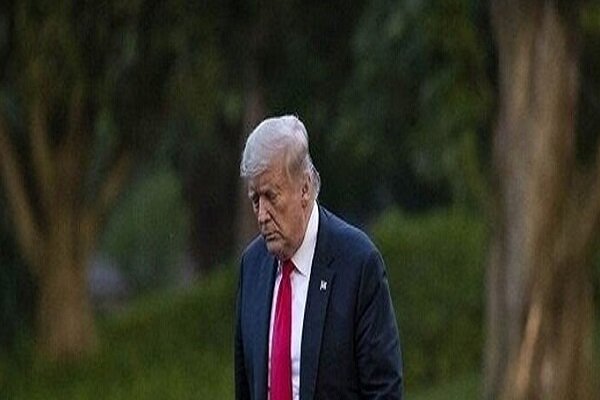
According to the International Desk of Webangah News Agency, President Donald Trump’s declaration of an “unprecedented economic war” against Iran signifies more than just a new phase of economic pressure. It indicates that Washington, after months of military and sanction-based pressure, faces limitations in its effective options. Instead of identifying new decisive targets within Iran, the United States is now extending its pressure beyond Iran’s borders, targeting countries, banks, and companies that continue to allow Tehran to conduct trade and maintain financial access.
This new policy from Trump can be interpreted as an attempt to compensate for the failures of previous pressures, shifting from direct pressure on Iran to pressuring the network that enables Iran to circumvent sanctions.
When Sanctions Reach Saturation Point
In recent years, the United States has placed virtually all critical sectors of Iran’s economy under sanctions, including oil, petrochemicals, shipping, metals, automotive manufacturing, the central bank, financial networks, and various economic institutions. The Atlantic Council Institute has also emphasized in its review of Iran sanctions that nearly all sectors of the Iranian economy are targets of U.S. sanctions.
Consequently, Washington’s challenge is no longer finding an unsanctioned sector in Iran’s economy; the issue is that each new sanction, compared to previous ones, does not necessarily create new and decisive pressure.
This is why Trump is now speaking of an “unprecedented economic war,” but the primary arena of this war is no longer solely Iran. The United States aims to pressure foreign banks, shipping companies, oil buyers, trade intermediaries, and even governments that cooperate with Tehran.
Military Pressure Failure Leads to Return to Sanctions
This policy shift should also be viewed within the context of recent military developments. Washington has turned to intensifying economic pressure at a time when military pressure has failed to achieve America’s desired political objectives. If military power alone could compel Tehran to accept Washington’s demands, there would be no need to declare a new “economic war.”
Therefore, Trump’s new policy can be seen as a change in the playing field. The U.S. has not retreated from the military arena to the economic one, but it is attempting to complement insufficient military pressure with economic pressure.
Western analysts suggest that the Iranian economy, over decades of sanctions, has gradually developed mechanisms to counter these pressures. Informal trade networks, oil sales, financial intermediaries, the use of local currencies, and cooperation with non-Western partners are part of these mechanisms.
China: Where Sanctions Hit a Wall
The biggest challenge to the new U.S. policy is China. According to data from the company Kpler, cited in a recent Al Jazeera report, over 80 percent of Iran’s oil exports in 2025 were destined for China. A significant portion of this oil goes to small Chinese refineries, with payments handled through smaller banks, trading companies in Hong Kong, and settled in Yuan.
This situation poses a serious problem for Washington. Sanctioning an Iranian company is fundamentally different from sanctioning a major Chinese bank. In the former case, the primary cost is borne by Iran; but in the latter, the U.S. enters into direct confrontation with one of the world’s largest economies.
For this reason, as Bloomberg has reported, the U.S. has previously warned two major Chinese banks about the risks of secondary sanctions related to Iran, but has not yet directly sanctioned them.
Sanctions Sword Could Turn on America
Here, one of the most significant contradictions in Washington’s sanctions policy becomes apparent. The power of U.S. sanctions largely stems from the dominance of the dollar and extensive access to the U.S. financial system. However, the widespread use of this very tool has encouraged targeted countries to find alternative routes.
Analyses from the Chatham House think tank indicate that the expansion of sanctions has deepened cooperation between countries like Iran, China, and Russia, pushing them towards developing payment and settlement pathways with less reliance on the dollar.
This means that while sanctions may create pressure in the short term, they increase the incentive for targeted countries to reduce their dependence on the U.S. financial system in the long run.
Consequently, the tool Washington uses to maintain its economic power could gradually foster the creation of competing tools.
America Must Pay More for Increased Pressure
This is the core problem with Trump’s new policy. The broader the U.S. extends secondary sanctions, the higher the likelihood of impacting the economic interests of major powers. Sanctioning Iran’s oil buyers can affect global oil supply and increase energy prices. Pressure on China could lead to a reaction from Beijing. Targeting foreign companies can also deepen the rift between the U.S. and its trading partners.
Therefore, Washington faces a difficult equation: to increase pressure on Iran, it must transfer pressure to other countries; but the larger this circle becomes, the greater the cost of implementing the policy for the U.S. itself.
Why Trump’s New Policy is Unlikely to Reach Final Resolution
The ultimate goal of U.S. sanctions is not merely to reduce Iran’s income; the primary objective is to change Tehran’s political behavior. However, the experience of recent years has shown that economic pressure does not necessarily lead to a change in political behavior. Iran can bear higher costs, alter its trade routes, and expand economic cooperation with countries like China and Russia. Even Chatham House has warned in its analysis of sanctions’ consequences that extensive pressure can contribute to the formation of parallel financial and trade networks, which ultimately reduce the effectiveness of U.S. sanctions tools.
For this reason, the main question for Washington is no longer “What can be sanctioned against Iran?” but rather, “To close every economic route for Iran, how many other countries is America willing to confront?”
From “Maximum Pressure” to “Costly Pressure”
Placing Trump’s new policy alongside recent military developments provides a clearer picture. After experiencing military pressure, America has now turned back to sanctions. However, this time, virtually Iran’s entire economy has already been sanctioned, and to find new targets, Washington is forced to look to Iran’s external network. This is precisely where “maximum pressure” can morph into “costly pressure.” America can increase economic pressure, but it cannot endlessly expand it without cost. China stands against this policy, Russia has increased incentives for cooperation with Tehran, and Iran itself has gained significant experience in creating alternative routes over the years of sanctions.
Ultimately, Trump’s new policy is less an indication of discovering a new economic weapon against Iran and more a sign of the limitations of Washington’s previous options. After military pressure failed to yield the expected results, America is now attempting to continue that pressure in the economic arena.
However, there is a fundamental difference this time: the target is not just Iran. To isolate Tehran, America must also pressure China, financial networks outside the West, oil buyers, and international companies.
And this is precisely where the tables might turn; sanctions intended to isolate Iran could deepen Iran’s cooperation with the East, increase the use of non-dollar currencies, and lessen some countries’ dependence on the U.S. financial system.
In such a scenario, Trump’s “unprecedented economic war” may be less the beginning of a new phase of pressure on Iran and more a sign that America’s sanctions policy has reached its own limits of power.


