
Israeli Media Expresses Deep Concern Over Ansarullah’s Strategic Gains in Yemen
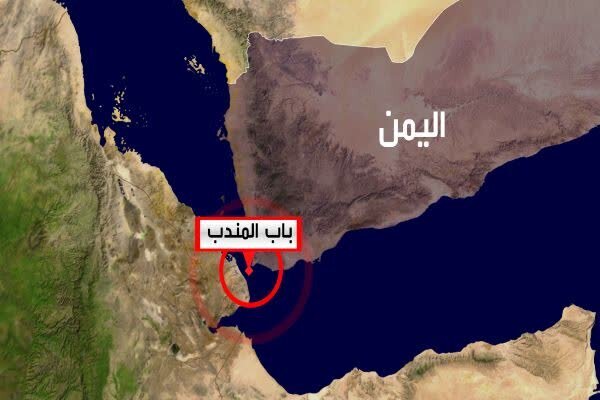
According to the International Desk of Webangah News Agency, Israeli media, in their analysis of regional developments and the significant victories achieved by Yemen‘s Ansarullah movement in recent clashes, have expressed deep concern over the trajectory of these events. The Israeli newspaper ‘Yedioth Ahronoth,’ in an article titled ‘Risk to Global Trade with Houthi Control of Red Sea Bottleneck,’ attempted to portray the Yemeni armed forces’ control of Bab el-Mandeb as a dangerous development for global commerce, contrary to the existing reality. The Yemeni side has stated that they will only prevent the passage of Saudi Arabian-affiliated ships through this strait, while other countries can pass through Bab el-Mandeb unimpeded. Yedioth Ahronoth reported that the control of the Iran-backed Ansarullah over Bab el-Mandeb, especially with their arrival at coastal areas and the strategic island of Perim, is a dangerous development.
Israeli media believe that the threat from these developments is not limited to Yemen; Saudi Arabia is also now at the center of the consequences of this tension. This situation has intensified following the attack on the “East-West” oil pipeline and its subsequent shutdown, coinciding with Ansarullah’s advances along the Yemeni coast towards the Red Sea. Yedioth Ahronoth added that this pipeline is a strategic route for Saudi exports, enabling oil transfer from the eastern region to the port of Yanbu on the Red Sea without passing through the Strait of Hormuz. According to the report, the targeting of this pipeline weakens one of Riyadh’s primary alternatives for dealing with disruptions in shipping traffic in the Persian Gulf.
From the perspective of the Israeli regime, the sensitivity of these developments stems from Saudi Arabia currently facing threats from two maritime fronts: on one hand, the Strait of Hormuz, which has experienced disruptions since the beginning of the war between the United States and Iran; and on the other hand, Bab el-Mandeb, which is under increasing pressure with the expansion of Ansarullah’s influence in the region.
Furthermore, Yoel Ginzburg, a researcher at the Institute for National Security Studies of the Israeli regime, told Yedioth Ahronoth that Gulf Cooperation Council countries are facing a situation they never wished for, as two vital export choke points are now threatened simultaneously. He believes the problem is no longer just about passage through Hormuz but also about ensuring secure access to global markets.
The ‘Times of Israel’ newspaper also linked Ansarullah’s control of strategic islands in the Red Sea and the group’s ability to threaten Saudi oil tankers, stating that Ansarullah’s advances strengthen Iran’s position in controlling two of the region’s most important maritime passageways, namely Hormuz and Bab el-Mandeb. These developments occur after Ansarullah successfully captured the city of Mokha and strategic positions and islands near Bab el-Mandeb. Simultaneously, forces affiliated with the Yemeni mercenary government announced reciprocal attacks against Ansarullah positions in the region. Reports also indicate that the tensions of the past week have resulted in over 500 casualties and the displacement of tens of thousands of people.
These analyses suggest that Tel Aviv views the Red Sea developments from a broader perspective than the Yemen conflict. Continued disruption in the Strait of Hormuz and increased Ansarullah influence in Bab el-Mandeb could put pressure on energy markets and international trade, presenting a new test for regional navigation security. The strategic location of Bab el-Mandeb, connecting the Red Sea to the Gulf of Aden and ultimately to the Suez Canal, holds double significance for the Israelis, as any shift in the balance of power in this strait would have direct consequences on the movement of ships and the regime’s trade between Asia and Europe.
On the other hand, Israel’s Channel 15 acknowledged that Ansarullah is gaining control of strategic islands overlooking the Bab el-Mandeb strait, at a time when Saudi Arabia is facing isolation and the United States is refraining from supporting Riyadh in direct confrontation. Moreover, Israel’s Channel 14 announced, ‘The Houthis have achieved a major strategic gain by taking full control of Bab el-Mandeb.’


