
Israeli Media Highlights Apparent US Strategic Failures in War Against Iran
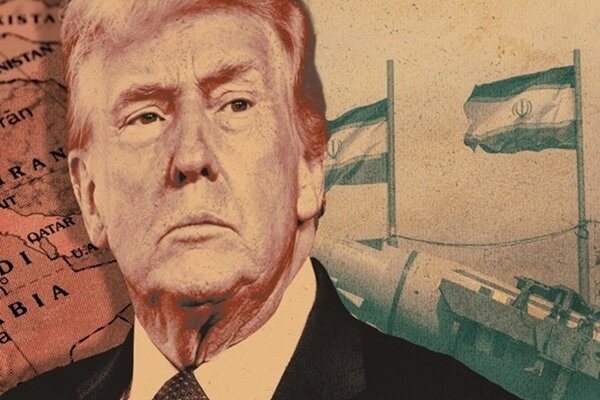
According to the International Desk of Webangah News Agency, a report by the Israeli website ‘Central Issue,’ authored by its editor Rami Yizhar, details the “dimensions of America’s strategic defeat in its unnecessary war against Iran and its long-term consequences.” Yizhar contends that what U.S. President Donald Trump sought to conceal and what his former Secretary of War Pete Hegseth vehemently denied is now evident to all.
Yizhar elaborates on the ramifications of this conflict, stating, “The Strait of Hormuz is closed, oil prices are around $110 per barrel, inflation is rising, and U.S. ammunition stockpiles are dwindling. The new, highly aggressive war initiated by Sana’a against Saudi Arabia also brings the dangerous threat of control over Bab el-Mandeb closer.”
He points to the first official report from the U.S. Department of Defense’s Inspector General, which corroborates what the U.S. administration had been denying for months: “The war with Iran has caused ammunition shortages and supply chain disruptions, forcing the Pentagon to undertake urgent measures to procure weapons, stockpile critical raw materials and components, and accelerate production lines.”
The direct cost of these actions has reached approximately $33.4 billion to date, with $22.3 billion allocated solely to ammunition. This figure excludes the full costs of rebuilding damaged bases. According to the report, over 50,000 American military personnel have participated in this war, with at least 18 fatalities and more than 750 wounded.
Operational losses are described as severe, with six fighter jets sustaining significant damage or being destroyed, along with 12 refueling aircraft and nine other aircraft. In the initial four months alone, at least 30 MQ-9 drones were lost. Furthermore, bases, defense systems, communication facilities, and advanced radar sites have been damaged. The report also notes an Iranian missile and drone attack on the U.S. Navy’s primary logistics hub in Bahrain.
Yizhar posits that America’s strategic problem is even more perilous. “The United States has consumed advanced munitions at a pace that its arms industries are struggling to replenish. These stockpiles are not only needed for the Middle East but also for the defense of allies and, crucially, for deterrence against China.” The Israeli analyst adds, “Therefore, this war has revealed a fundamental limitation in American power: money can be printed and collected quickly, but advanced missiles cannot.”
The report indicates that a far more dangerous phase has begun, involving the strengthening of the Ansar Allah movement’s control and capabilities in the Bab el-Mandeb region. From Tehran’s perspective, this means that alongside pressure on the Strait of Hormuz in the east, the ability to exert intense pressure through Yemen on the southern gateway to the Red Sea is increasing. This development poses a threat to the global economic order, as disruption in the Strait of Hormuz elevates the importance of the Saudi route to the west and the Bab el-Mandeb passage. Targeting this route could lead to increased prices for oil, transportation, and insurance, disrupt goods movement through the Suez Canal, and exacerbate inflationary pressures. If both chokepoints (Hormuz and Bab el-Mandeb) face simultaneous threats, the U.S. defeat could escalate into an international catastrophe.
The report highlights a clear contradiction in U.S. positions regarding the objectives of the Iran war, described as restoring American deterrence and weakening Iran. This is in contrast to the Pentagon’s practical admissions of depleted stockpiles and challenges in troop and equipment supply, the continued closure of the Strait of Hormuz, $110 oil prices, and the expansion of Iranian pressure to Bab el-Mandeb. Yizhar concludes, “These are the results that any reader will see and understand who has been strengthened, who has been weakened, and who must pay the price of war.”
The Israeli writer further notes a growing sentiment worldwide, particularly in the United States, that Benjamin Netanyahu bears primary responsibility for dragging the region into war and its subsequent failures. This is no longer merely an internal dispute within the occupied territories but represents a concentrated danger for the Tel Aviv government.


