The Enduring Institutional Charisma of Sayyed Hassan Nasrallah Fuels Hezbollah’s Strategic Continuity
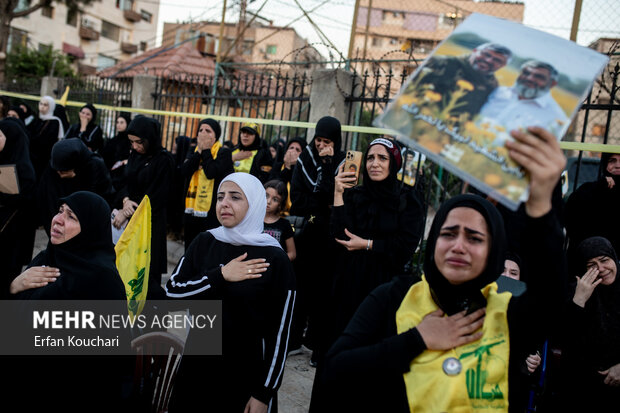
According to the International Desk of Webangah News Agency, two years after the martyrdom of Sayyed Hassan Nasrallah, the Secretary-General of Hezbollah, a profound truth about his leadership has emerged: his charisma has transformed from an individual phenomenon into an unassailable strategic institution, raising questions about how this enduring ideology can be sustained.
The Institutional Charisma of Sayyed in Hezbollah
Sayyed Nasrallah was more than a military commander; he was a strategic thinker who laid the foundation for an ideology of resistance that transcends geographical and sectarian boundaries. He understood that confronting the Israeli occupation was not a religious or racial battle, but a struggle against occupation and crime. This realization enabled him to transform the Palestinian issue from an Arab and national concern into a humanitarian and global one. Sayyed employed a unifying discourse, forging a united front of resistance that surpassed political and ideological divides.
The characteristic of Sayyed Hassan Nasrallah’s speeches was not merely impassioned rhetoric; they became subjects of academic and analytical study, their multifaceted dimensions deserving of teaching in university classrooms and strategic research institutions worldwide. Beyond addressing the outward aspects, staging positions, and body language, Sayyed’s speeches were underpinned by the concepts of ‘conceptual alignment’ and ‘deterrent credibility.’ This meant that his words were a clear reflection of the balance of power on the ground, and sincerity became the most effective soft power against rivals. The ‘tone of voice’ and his persistent smile during the darkest moments of war became significant elements of psychological warfare and influencing public opinion, both among allies and adversaries.
How Institutional Charisma Was Formed in Hezbollah
The martyred Secretary-General of Hezbollah did not limit himself to individual charisma; he strived to transform it into an integrated system of discourse, action, and institution. He recognized that true leadership is not confined to one person but is meaningful in building an intellectual and institutional framework capable of continuing the path after his departure. This profound understanding of leadership’s role in liberation movements reflects his influence from the thought of historical leaders who transformed their movements from relying on individual charisma to becoming institutionalized liberation movements with deep-rooted ideologies.
Hezbollah’s flexible institutional structure was not an overnight development but the result of a strategic vision that Sayyed Hassan Nasrallah had worked on for years. He understood that resistance is not merely a military act but also a cultural and ideological one aimed at liberating public consciousness. Therefore, he strived to update the discourse of resistance in line with regional political and social developments while preserving the independence of political decision-making for the party.
Speeches That Were an Operations Room
In traditional military and intelligence contexts, deterrence is based on arsenal size and purely material power calculations. However, the unique experience crafted by the ‘martyr of the ummah’ transformed ‘psychological deterrence’ in his speeches into a game-changing weapon. This weapon was meticulously evaluated in decision-making centers and operations rooms before any calculation of tank movements or missile trajectories. His soft power was not merely a polished political text or an attempt to stir fleeting emotions; rather, it rested on what is known in political psychology as ‘credibility-based deterrence.’
This simple yet profound truth transformed his speeches into environmental and psychological realities that Zionist and Western intelligence experts analyzed not as passionate orations, but as ‘reliable intelligence’ actionable on the ground. A study by Zionist institutions titled ‘Managing Israeli Propaganda in the Second Lebanon War,’ authored by Udi Libal and published in the newspaper ‘Yedioth Ahronoth,’ indicated that Sayyed Hassan Nasrallah’s speeches achieved the highest level of credibility in terms of warfare and its management.
In psychological warfare research centers, Sayyed’s speeches were not considered a supplementary element to the battlefield but an ‘independent operations room.’ This demonstrated that sincerity in discourse, grounded in steadfast action on the field, can penetrate the toughest security systems and instill a sense of impending defeat in the hearts of enemies. This represents the highest manifestation of psychological deterrence, where the enemy’s words become decisive, and the television screen transforms into the primary arena for delineating confrontation lines and establishing the rules of engagement.
The ‘Spiderweb’ Psychological Warfare
When Sayyed Hassan Nasrallah uttered the famous phrase ‘Israel is weaker than a spider’s web’ after the liberation of southern Lebanon in 2000, it signaled a precise psychological strategy aimed at shattering the Zionist regime’s psychological dominance. At the time, Tel Aviv promoted its ‘myth of absolute superiority’ to intimidate enemies and prevent the formation of resistance. However, Sayyed Hassan Nasrallah recognized that this superiority was more psychological than military, and thus focused on dismantling this myth, questioning Israel’s ability to withstand sustained resistance.
During the July 2006 war, this concept manifested in practice as the Lebanese resistance withstood the region’s most powerful military machine for over a month. The martyred Nasrallah appeared with calculated speeches, announcing precise strikes deep within ‘Israel,’ and with his composure and steadfastness, he shook the morale of the Israeli public and disrupted the calculations of Tel Aviv’s leaders.
This type of psychological warfare reflects his influence from the concept of ‘shattering psychological dominance,’ which relies on dismantling awe and reconstructing public awareness. This approach continued after his martyrdom; Hezbollah maintained its use of advanced intelligence strategies, primarily leveraging psychological warfare and social media. Within this institution, psychological warfare is no longer a mere tactical tool but has become an integral part of the resistance’s combat doctrine, ensuring its continued impact even after the absence of the strategy’s chief architect.
Renewability of the Thoughts of the Martyred Nasrallah
Following the martyrdom of Sayyed Hassan Nasrallah, the Palestinian resistance and Hezbollah face significant challenges in sustaining the ideology and leadership of the resistance. Sayyed Nasrallah left behind a legacy of strategic thought and innovative tactics. He understood that true leadership is not limited to an individual but is meaningful in building an intellectual and institutional framework capable of continuing its work after his departure. Therefore, he worked to create flexible organizational structures adaptable to regional and international changes to ensure the continuity of resistance after him.
However, this legacy faces various challenges, most notably regional and international developments, especially the normalization of relations between Arab countries and the Zionist regime, a trend aimed at isolating the resistance and weakening its axis. The resistance also confronts internal challenges related to the complexities of the Palestinian scene and political rifts. These issues require the new leadership to continue Sayyed Nasrallah’s project of unifying ranks and overcoming ideological differences.
The distinguishing feature of the martyred Secretary-General of Hezbollah’s legacy is its capacity for renewal. Resistance is not solely a military act but also a cultural and ideological one aimed at liberating public consciousness. Thus, Sayyed strived to update the discourse of resistance in line with regional political and social developments. The first step in this renewal is strengthening Palestinian national unity and expanding regional and international alliances, while preserving political decision-making independence. New strategies in psychological and media warfare must also be developed, relying on technological advancements and digital media to counter Zionist and Western media dominance.
Sayyed Nasrallah demonstrated that true leadership is not confined to an individual but is embodied in a renewable ideology that adapts to time and place, inspiring new generations to continue the path of freedom and justice. Thus, the assassination of Sayyed Hassan Nasrallah did not end his charismatic leadership phenomenon in all its dimensions; rather, it transformed it from the person to the institution, and from individual charisma to an integrated system. This school of thought, while addressing passionate emotions, does not neglect rational reasoning and separates political analysis from its deeply rooted اعتقادی (faith-based) dimension.