
Khalil Al-Hayya Appointed New Political Bureau Chief of Hamas
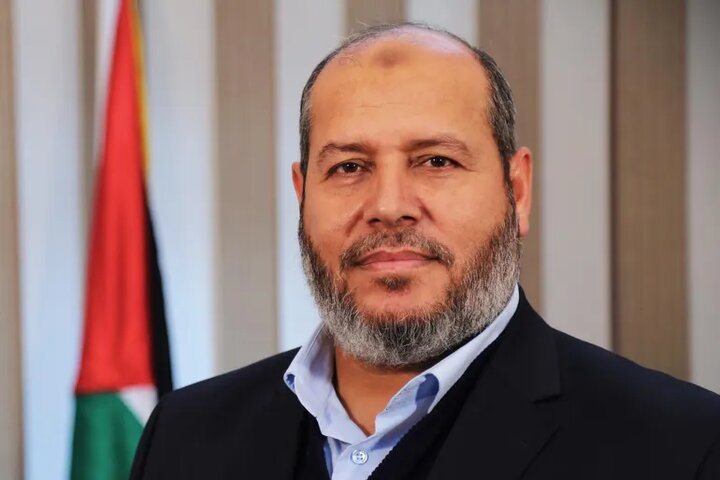
According to the International Desk of Webangah News Agency, the election of Khalil Al-Hayya as the new head of the Political Bureau of the Islamic Resistance Movement (Hamas) signifies a new chapter in the group’s political and organizational life. Al-Hayya, who has been a key decision-maker and chief negotiator for Gaza ceasefire talks in recent years, assumes leadership at a time when a significant portion of Hamas’s first-generation leaders have been martyred during the Gaza conflict and Israeli assassination operations.
His selection is viewed as an indicator of the continuation of Yahya Sinwar’s policy and the consolidation of influence by the faction close to the field leaders in Gaza within Hamas’s leadership structure.
Al-Hayya, born in the Gaza Strip in 1960, joined the Muslim Brotherhood movement in Palestine in its early years and became a core member of Hamas upon its founding in 1987. He pursued Islamic studies, earning a bachelor’s degree from the Islamic University of Gaza, a master’s from the University of Jordan, and a doctorate from the University of the Holy Quran and Islamic Sciences in Sudan. This academic background enabled him to actively participate in cultural and educational fields alongside his political activities.
He spent several years in Israeli prisons during the 1990s and gradually rose through the Hamas ranks after his release. Al-Hayya’s prominence increased following the Palestinian legislative elections in 2006, where he was elected to the Palestinian Legislative Council as a candidate for the “Change and Reform” list. After Hamas’s victory, he emerged as a prominent spokesperson and political figure for the movement.
His position within the leadership was further strengthened after Hamas took control of the Gaza Strip in 2007. Initially holding local responsibilities in Gaza City, he eventually became a member of the movement’s supreme leadership and one of the closest figures to the commanders of the Izz ad-Din al-Qassam Brigades. Many observers consider Al-Hayya to be the closest political figure to Yahya Sinwar, serving as his deputy during Sinwar’s tenure as Hamas leader in Gaza and playing a direct role in many of the movement’s strategic decisions. Reports suggest that Sinwar had asked several members of the Political Bureau to leave Gaza before the October 7, 2023, operation to pursue external missions, with Al-Hayya being one of them.
Sources close to Hamas believe Al-Hayya possessed more information about the preparations for the October 7 operation than many other Political Bureau members, although he was not privy to the complete details of the plan, as this information was restricted to a very small circle of military commanders. Following the outbreak of the Gaza war, Al-Hayya consistently defended Sinwar’s decision to launch the October 7 operation, framing it as an action towards the liberation of Palestinian prisoners.
In the past two years, Al-Hayya has been most recognized as the head of Hamas’s negotiating delegation, leading indirect talks with Israel mediated by Qatar, Egypt, and other parties. He served as Hamas’s principal representative in most rounds of discussions concerning ceasefires, prisoner exchanges, and the entry of humanitarian aid. His role in negotiations was not limited to the recent conflict; he also played an effective part in the negotiations that ended the 2014 war and the consultations related to the “Sword of Jerusalem” conflict in 2021.
A significant political characteristic of Khalil Al-Hayya is his support for developing Hamas’s relations with the Islamic Republic of Iran and Hezbollah in Lebanon. He is among the Hamas leaders who, alongside Yahya Sinwar and Saleh al-Arouri, have advocated for the revival of strategic ties with Tehran, which had been strained after the Syrian crisis. Al-Hayya has participated in numerous official meetings with Iranian officials and joint sessions with leaders of the resistance axis. In 2022, he led a Hamas delegation to Damascus to restore relations with the Syrian government, although subsequent regional developments hindered the full normalization process between the two sides. Consequently, many analysts believe Al-Hayya’s appointment signals Hamas’s continued approach to maintaining and strengthening relationships with the resistance axis.
Khalil Al-Hayya has been a frequent target of Israeli assassination attempts over the past two decades. In 2007, an Israeli airstrike on his family home in Gaza’s Shuja’iyya neighborhood resulted in the martyrdom of several relatives. During the 2014 war, his eldest son’s home was targeted, leading to the martyrdom of his son Osama, his wife, and three grandchildren. Following the start of the recent Gaza war, several more of his family members were martyred in Israeli attacks. In 2025, Israel attempted to assassinate Al-Hayya in Doha, an operation that resulted in the martyrdom of his son Hemam and several companions. Later, another son, Azzam, was martyred in a separate attack in Gaza.
Khalil Al-Hayya assumes the leadership of Hamas’s Political Bureau at a time when the movement faces its most arduous conditions. The protracted Gaza war, the assassination of a large number of its political and military leaders, extensive international pressure, and the complexity of ceasefire and prisoner exchange negotiations are among the most critical challenges before him. However, Al-Hayya’s proximity to the Yahya Sinwar faction and Gaza’s military commanders suggests that in choosing a new leader, Hamas is emphasizing the continuation of its recent strategy rather than a shift in direction. This strategy is based on maintaining internal cohesion, persisting with resistance, and strengthening ties with the resistance axis. Therefore, Khalil Al-Hayya’s leadership is expected to be more of a continuation of the path Hamas has followed in recent years, particularly since the Gaza war, rather than the instigator of fundamental changes in its policies.


