Bab al-Mandab Closure Sparks Major Economic Blow to Saudi Arabia, Impacts Global Oil Market
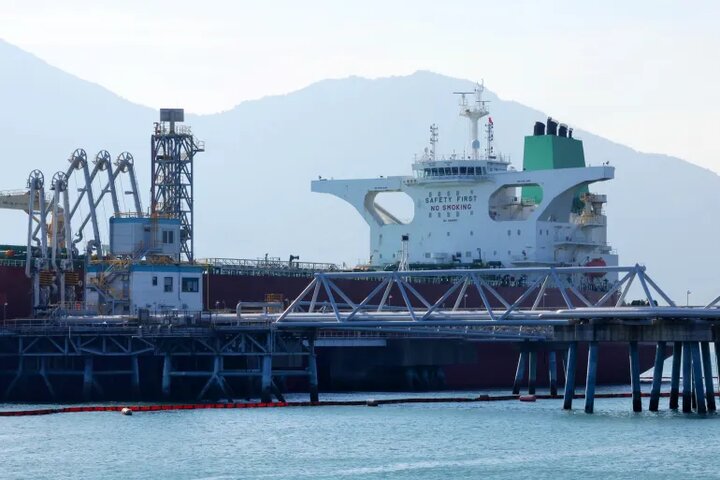
According to the International Desk of Webangah News Agency, Al Jazeera has reported on the substantial financial damages incurred by Saudi Arabia due to the closure of the Bab al-Mandab Strait and the ongoing naval blockade in the Red Sea. This development occurs concurrently with shipping disruptions in the Strait of Hormuz, attributed to U.S. actions against Iran.
Following news of the maritime blockade affecting Saudi Arabia in the Red Sea and Bab al-Mandab, oil prices experienced an increase. Brent crude futures rose by $1.12 to $89.22 per barrel, while U.S. crude futures saw a gain of 74 cents, reaching $83.23 per barrel.
Reuters has estimated that a complete closure of the Bab al-Mandab route could reduce global oil supply by up to 7%. This is because most of Saudi Arabia’s oil exports would be unable to exit the region through their current pathways.
Maritime data analysis firm Kpler indicated that the involvement of Yemen in the conflict has shifted the risk from the Strait of Hormuz to the Red Sea, directly threatening Bab al-Mandab. This strait has become a primary route for Saudi oil, refined products, and trade between Europe and Asia.
Data compiled by Bloomberg reveals that crude oil exports from the Yanbu port reached 4.19 million barrels per day in June. This surge followed Saudi Arabia’s redirection of a significant portion of its exports toward the Red Sea in response to disruptions in the Strait of Hormuz.
Kpler estimates that disruptions at the Bab al-Mandab Strait would compel tankers carrying Saudi crude oil from Yanbu to Asia to reroute via the north and the Suez Canal. This alternative route would extend the journey from Yanbu to South Korea from 24 days to 54 days.
According to Kpler, this revised route would lead to an approximate threefold increase in demand for maritime transport, measured in nautical miles, compared to current levels. The firm also noted that very large crude carriers (VLCCs) cannot transit the Suez Canal at full capacity due to draft limitations. This would necessitate the use of Suezmax tankers or partially loaded VLCCs.
Kpler further elaborated that the alternative route would require the reorganization of loading operations at Yanbu, increased reliance on smaller tankers, and management of potential traffic congestion in the Suez Canal.
The company also stated that bypassing the Bab al-Mandab Strait would extend travel time between the Middle East and East Asia to approximately 50 days, more than doubling the current transit time. This would result in increased shipping costs and fuel consumption, necessitating a redistribution of active tankers globally, ultimately leading to a reduction in the supply of oil for immediate delivery in the Asian market.
Kpler believes that disruptions at Bab al-Mandab do not necessarily mean a halt to Saudi exports, as shipments can be rerouted. However, this would significantly increase oil transportation costs and the final price for Asian buyers.