
Afghanistan’s Transit Potential Fuels Eurasian Connectivity Competition
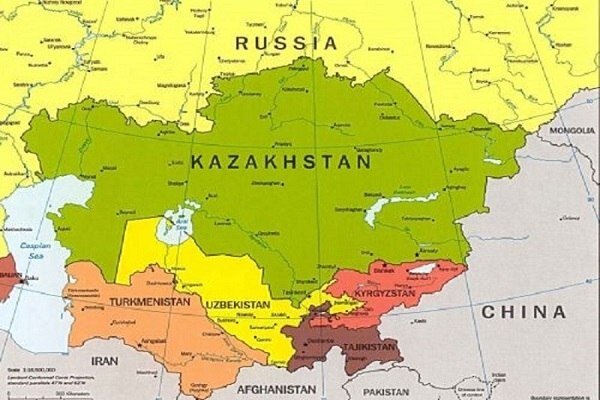
According to the International Desk of Webangah News Agency, recent developments in Afghanistan indicate a significant shift in its regional standing. While previously viewed primarily through the lenses of security, terrorism, extremism, migration, and drug trafficking, Afghanistan’s geopolitical importance has gained a new dimension: its potential role as a transit nexus linking Central Asia, South Asia, and routes to the Indian Ocean.
Afghanistan aims to become a new hub for Eurasian transit communications and a pivotal connection point between Central and South Asia. To achieve this, Kabul is leveraging economic cooperation, transit, energy, and security dialogues to enhance engagement with Central Asian nations and, by extension, improve its own political standing. Afghanistan’s trade with Central Asian countries was reported at approximately $2.7 billion in 2025, with Kabul setting a target to increase this figure to $10 billion within three to four years.
This evolving landscape holds particular significance for Iran. Should new transit networks materialize in Afghanistan and Central Asia, Iran could find itself at the center of crucial alternative routes. Conversely, failure to develop its infrastructure and transit diplomacy could lead to Iran ceding vital capacity to regional rivals. The core issue for Tehran extends beyond Afghanistan itself, encompassing the critical question of which routes Central Asia will utilize to connect to open waters, South Asia, the Persian Gulf, the Caucasus, and Europe.
From Buffer State to Connector Nation
Afghanistan’s geography bestows upon it a unique strategic position. Situated between Central and South Asia, it can also connect to the Persian Gulf and the Sea of Oman via Iran. Consequently, the development of transport networks within Afghanistan has the potential to transform its status from a landlocked country to a connecting nation.
During the Termez summit held in Tashkent, Uzbekistan, in June of this year, connectivity projects between Afghanistan and Central Asia were discussed not merely as bilateral initiatives but as integral components of the broader integration process between two major Asian subregions. The objectives of these projects extend beyond merely providing Central Asia access to the southern parts of the continent and the Indian Ocean; they also envision facilitating the movement of goods from South Asia towards Central Asia, the Caspian Sea, the Caucasus, and Europe.
This development is profoundly important for Iran. Upon the completion of such a network, Afghanistan could simultaneously serve multiple corridors: connecting to Pakistan and India in the south, Central Asia in the north, Iran in the west, and China via Central Asian networks in the east.
Thus, Afghanistan is poised to become a potential transit crossroads. However, this crossroads does not necessarily preclude Iran’s involvement; on the contrary, it could present an opportunity for Iran, provided Tehran actively participates in the design and integration of these networks.
Why Central Asia Seeks New Routes
The countries of Central Asia—Uzbekistan, Kazakhstan, Turkmenistan, Tajikistan, and Kyrgyzstan—share a common challenge: being landlocked and reliant on the transit routes of other nations.
Consequently, Central Asian countries have increasingly focused on diversifying their export and import routes in recent years. Uzbek officials, at the Termez summit, emphasized the creation of a multi-route, flexible network for accessing global markets. Within this framework, the routes through Afghanistan and Iran are being considered alongside Caspian Sea and Caucasus routes.
For Central Asia, the imperative extends beyond reducing transportation costs; it also encompasses minimizing geopolitical dependency. The greater a country’s access to multiple transit routes, the less vulnerable it becomes to political shifts, sanctions, border closures, and regional crises.
From this perspective, the strained relations between Afghanistan and Pakistan, along with recurring border conflicts, have amplified Kabul’s motivation to explore alternative routes. In 2025, despite frequent border closures with Pakistan, Afghanistan’s trade saw a significant increase through Iran and Central Asian countries, with routes via Iran, Uzbekistan, Turkmenistan, and Tajikistan helping to mitigate some of the dependency on Pakistani routes.
Chabahar: Iran’s Strategic Opportunity
In this context, the port of Chabahar stands as Iran’s most significant asset. Chabahar offers a fundamental advantage to Central Asian nations: access to the Indian Ocean without transiting through Pakistan. Uzbekistan, itself a landlocked country, has shown particular interest in this route. Chabahar is among the primary options for connecting Central Asia to India and open waters, with proposals even exploring the establishment of a multimodal route involving Uzbekistan–Turkmenistan–Iran–India, leveraging Chabahar’s capabilities.
This presents a substantial advantage for Iran. If goods from Uzbekistan, Kazakhstan, and other Central Asian countries can reach Iran via rail or road and then proceed to Chabahar, Iran would transition from merely being a destination for goods to a provider of transit services.
The importance of this initiative is further amplified if the Afghan route is integrated into the Chabahar network. The Chabahar Agreement, established between Iran, India, and Afghanistan, was fundamentally designed to facilitate the transportation of goods and provide Afghanistan access to international markets through the port of Chabahar. The Zaranj–Delaram highway also connects Chabahar to Afghanistan’s road network. This 217-kilometer, two-lane highway, known as Route 606, was constructed by India in Afghanistan, linking Delaram in Farah Province to Zaranj in Nimroz Province, near the Iranian border.
Consequently, a potential chain could form, extending from Central Asia to Afghanistan, Iran, and India. If this chain is fully realized, Iran could find itself at the heart of one of South Asia’s most significant North-South trade networks.
Iran-Afghanistan: Rival or Complement to the Trans-Afghan Route?
One of the most critical current developments is the competition between various routes seeking to connect Central Asia to the open seas. Uzbekistan, on one hand, supports the Termez (Uzbekistan) – Mazar-e-Sharif (Afghanistan) – Kabul – Peshawar (Pakistan) route. This route, if completed, would link Central Asia to Pakistani ports via Afghanistan.
Concurrently, Turkmenistan is pursuing the Torghundi (a city on the Afghanistan-Turkmenistan border) – Herat – Kandahar – Spin Boldak (a city in Afghanistan near the Pakistan border) corridor. Iran, meanwhile, is developing routes that connect Afghanistan to its rail and port infrastructure, including the ongoing completion of the Chabahar-Zahedan railway line. This situation signifies a genuine competition among multiple southern gateways for Central Asian nations.
In one scenario, Central Asia would connect to Pakistani ports like Karachi and Gwadar via Afghanistan. In a second scenario, Central Asia would reach Pakistan by transiting through Turkmenistan and Afghanistan. In a third scenario, Central Asian countries would enter Iran’s rail and road network via Afghanistan or directly from Turkmenistan, reaching open waters through Chabahar or Bandar Abbas. Therefore, Iran should not assume that the mere existence of Chabahar guarantees its share of regional trade. Chabahar will only possess true geopolitical advantage when it is connected to a swift and competitive network of rail, road, customs, and logistics.
The Importance of the Khaf-Herat Railway
The Khaf-Herat railway holds particular significance in this landscape. This route could serve as the initial crucial link connecting Afghanistan’s rail network to Iran’s. Subsequently, it would facilitate Afghanistan’s integration into Iran’s broader rail network and its southern ports.
Afghanistan’s current rail network remains incomplete, but its development plans include connections to various points in Iran, Central Asia, and Pakistan. Projects related to the Khaf-Herat route, Herat-Mazar-e-Sharif, and northern Afghan routes could potentially transform the country into a multi-directional rail network in the future. From Iran’s perspective, the significance of the Khaf-Herat railway transcends bilateral trade with Afghanistan. Its primary importance becomes evident when this line connects to northern Afghanistan’s rail network and, subsequently, to Central Asia. In such a scenario, Iran could become a more vital route for transferring goods from Central Asia to its southern ports.
The Five-Country Project: Where Iran’s and Central Asia’s Interests Converge
One of the most important initiatives that Iran should consider is the China–Kyrgyzstan–Tajikistan–Afghanistan–Iran rail corridor.
This project, if realized, could connect China and Central Asia via Afghanistan to Iran, ultimately providing access to the ports of Chabahar and Bandar Abbas, as well as western routes to Turkey and Europe. The proposed route would span approximately 2,100 kilometers, with a substantial portion passing through Afghan territory.
The geopolitical significance of this project for Iran is immense. Upon its implementation, Iran would transform from being at the end of a route to becoming a starting point or a central node in a vast network. Such a network would enable Iran to simultaneously fulfill two roles: the southern gateway for Central Asia and a bridge for Central Asia towards Europe.
The Middle Corridor: Opportunity and Threat for Iran
However, a significant competitor is also strengthening in Iran’s northwest: the Caspian Sea – Azerbaijan – Georgia – Turkey route, commonly known as the Middle Corridor. Connectivity from South Asia, through Afghanistan and Central Asia, to the Caspian Sea, the Caucasus, and subsequently to Europe is also possible via this corridor. In this scenario, the infrastructure of Azerbaijan, Georgia, and Turkey could become a natural extension of Central Asian corridor networks.
For Iran, this development has two facets. On one hand, the expansion of regional corridors can create opportunities for new connections and increased trade. On the other hand, if a substantial portion of Central Asian trade is directed towards the Middle Corridor and the Caucasus, Iran might lose some of its advantage as an East-West transit route. Therefore, Tehran must strive to connect the networks of Central Asia, Afghanistan, the Caspian Sea, and the Caucasus to its own corridor system.
Makran: Beyond Chabahar
Within this framework, the development of the Makran coast gains geopolitical importance for Iran. Chabahar should not be viewed merely as a port but as part of the broader Makran logistical and industrial region.
If goods are to enter Iran from Kazakhstan, Uzbekistan, Tajikistan, or Afghanistan and then be exported from Chabahar to India and other markets, a single port is insufficient. A comprehensive network of corridors is essential, including:
– Central Asia – Afghanistan – Iran railway;
– Chabahar – Zahedan railway and its connection to the national network;
– Logistics and warehousing centers;
– Free and special economic zones;
– Rapid customs and clearance services;
– International banking and insurance;
– Road and rail transport fleets;
– Processing and packaging industries in Makran.
Without this integrated chain, Chabahar will remain a potential capacity rather than a true transit hub.
Afghanistan: An Opportunity for Iran or a Field of Competition?
A crucial point is that the developments in Afghanistan should not be viewed solely as opportunities. Afghanistan has now become a battleground for multiple routes and international and regional powers.
China, through Central Asia and its Belt and Road Initiative projects, seeks to expand connectivity networks to counter maritime threats from the United States. Pakistan aims to preserve the status of its ports. India supports the Chabahar route but lacks sufficient momentum in this regard. Central Asian countries are striving to diversify their routes. Russia is interested in developing North-South corridors and increasing engagement with Afghanistan. Turkey and Azerbaijan also benefit from enhanced connectivity in Central Asia and the Caucasus. Consequently, competition among various countries to establish different corridor routes through Afghanistan for their own benefit, and the efforts of different actors to link these routes to larger networks, are ongoing.
Therefore, Afghanistan may host multiple parallel corridor routes in the future rather than a single one. This situation is positive for Iran in one respect, as the diversification of routes is likely to increase demand for transit services. However, Iran must be able to maintain its position in the competition for reduced costs, speed, security, and reliability.
Kabul’s Economic Diplomacy and Opportunities for Iran
Kabul is attempting to leverage economic cooperation to reshape Afghanistan’s image and bolster its regional legitimacy. The Afghan government presents itself as a natural trade bridge between Central and South Asia, with economic cooperation, transit, energy, and security forming its core message to regional nations. This is significant for Iran. If Iran seeks to maintain sustained economic and transit influence in Afghanistan, it must go beyond merely border trade and political relations. Iran needs to position itself as one of the architects of Afghanistan’s new economic architecture.
In other words, Iran’s policy should shift from trading with Afghanistan to integrating Afghanistan into Iran’s economic network. This integration could encompass energy, railways, roads, ports, mines, processing industries, agriculture, border markets, and logistics services.
What Strategy is Most Suitable for Iran?
Considering the aforementioned trends, several specific policy recommendations can be proposed for Iran:
First: Solidify Chabahar as a National Transit Project
Chabahar must evolve from a port project into a national geo-economic endeavor. Its connection to the rail network, the development of logistics centers, and the provision of genuine incentives for Central Asian countries are essential.
Second: Design a Special Transit Package for Central Asia
Iran can develop specific tariff, customs, and logistics packages for Uzbekistan, Tajikistan, Kazakhstan, and Kyrgyzstan to make utilizing Iranian routes economically more attractive for them.
Third: Complete the Afghanistan Link
The Khaf-Herat railway must not remain an isolated line; it should be connected via Herat to the rail network of northern Afghanistan and subsequently to Central Asia. In doing so, Iran’s investment in Afghanistan would gain manifold strategic value.
Fourth: Active Participation in the Five-Country Project
Iran should pursue the China–Kyrgyzstan–Tajikistan–Afghanistan–Iran railway project more seriously. This project has the potential to become one of the most important instruments for connecting Iran to Central Asia and China.
Fifth: Link Chabahar to the North-South Corridor
Chabahar should not be viewed in isolation from Iran’s other transit networks. The objective should be to create a network that provides Central Asia access to both the Indian Ocean and the Persian Gulf and Europe.
Sixth: Trilateral Cooperation: Iran–Afghanistan–Central Asia
Iran can initiate a mechanism for regular dialogue on transit between Afghanistan and Central Asian countries. This mechanism could focus on practical issues such as tariffs, customs, railways, standards, route security, and information exchange.
Seventh: Prevent Afghanistan from Becoming a Monopolistic Route for One Country
Iran’s interests do not necessitate Afghanistan being solely dependent on Pakistani or Iranian routes. Iran benefits from a multi-route trade system for Afghanistan, as this would increase demand for various connections, allowing Iran to solidify its position among them.
What is the Most Significant Threat to Iran?
The threat to Iran is not necessarily the success of a specific project by Pakistan, Azerbaijan, Turkey, or China, but rather the formation of a network of transit routes in which Iran has no say in its design. If Central Asia can connect to Pakistan and India via Afghanistan, while simultaneously gaining access to Europe through the Caspian Sea and the Caucasus, then these countries’ dependence on Iranian routes will diminish.
Conversely, if Iran fails to transform Chabahar into a competitive logistics hub, its geographical advantage alone will be insufficient. Therefore, the primary competition in the future will not be about geography, but about the quality of connectivity. The country that can offer cheaper, faster, safer, more predictable, and less costly routes will be more successful.
Conclusion
The developments in Afghanistan and Central Asia signal the gradual emergence of a new economic and transit architecture at the heart of Eurasia. Afghanistan is transitioning from its traditional role as a buffer and security state towards playing the part of a bridge between Central and South Asia.
Kabul is consciously transforming its geographical position into political and economic capital, endeavoring to expand its relations with Central Asian countries through cooperation, trade, transit, energy, and security. For Iran, this trend represents both a historic opportunity and a strategic warning.
The opportunity lies in Afghanistan and Central Asia potentially generating significant demand for Iran’s ports, rail, and road networks. Chabahar could become the gateway for Central Asia to the Indian Ocean, while the Khaf-Herat corridor and the Five-Country Corridor could link Afghanistan to Iran’s transportation network.
The warning stems from the fact that Central Asian countries are simultaneously developing other options, including the Trans-Afghan route to Pakistan, the Caspian-Caucasus-Turkey corridor, and networks associated with China. Recent regional studies have underscored the competition and overlap among these projects.
In such a scenario, Iran’s policy should not solely focus on maintaining its existing share. Tehran must plan to increase the transit dependency of Central Asia and Afghanistan on Iran’s network, not by creating a monopoly, but by offering competitive services, adequate infrastructure, attractive tariffs, route security, and simultaneous connectivity to Chabahar, Bandar Abbas, the domestic rail network, and the North-South Corridor.
From this perspective, Chabahar should not merely be ‘Iran’s port for Afghanistan’; it should become the gateway of the Indian Ocean for Central Asia. Similarly, Afghanistan should not be viewed merely as an export market for Iran but should become a connecting link for Iran with Central Asia, China, and South Asia.
Ultimately, the central question for Iran is whether it will be merely one of the transit routes in the new Eurasian architecture or will emerge as one of the principal designers and hubs of the region’s transit network. The answer to this question depends more than anything on the speed of Iran’s infrastructure development, the completion of its eastern railways, the upgrading of infrastructure at Chabahar port and the Makran region, and, most importantly, the activation of Tehran’s economic and transit diplomacy in Central Asia and Afghanistan. While the window of opportunity is currently open for Iran, it will not remain so indefinitely, given the simultaneous development of Trans-Afghan routes, the Middle Corridor, and competing networks.


